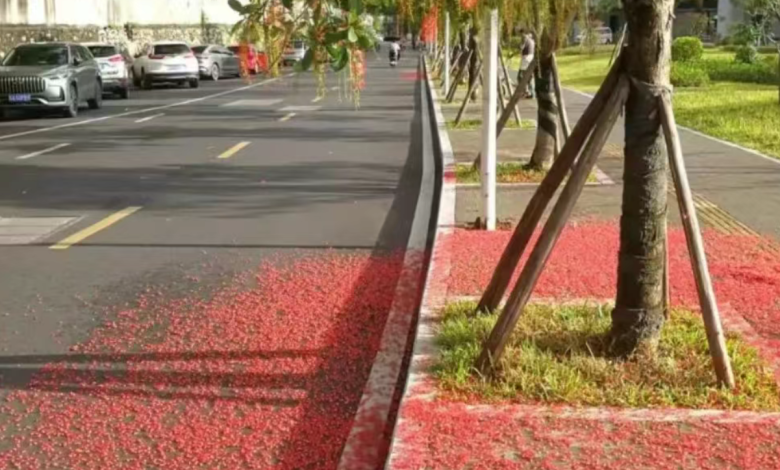
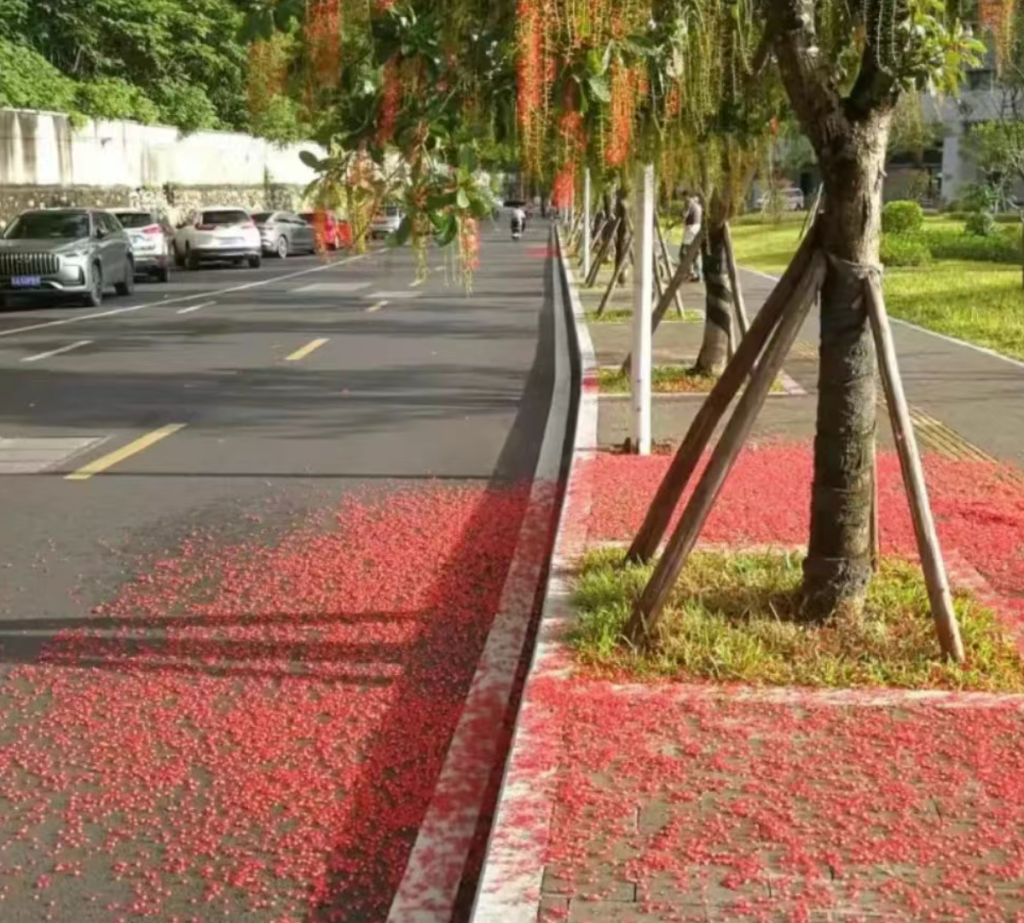
Walking through Guangzhou’s streets, you’ll be greeted by explosions of red blooms—from the fiery Flame Trees to the delicate Night-Blooming Cereus . These floral landmarks don’t just beautify the city; they embody its tropical spirit and cultural identity.
In this guide, I’ll introduce you to:
✔ 4 iconic red-flowered street plants of Guangzhou
✔ Where and when to spot them (with bloom calendars)
✔ Cultural significance and safety tips
✔ Photography hotspots for capturing their beauty
1. Flame Tree (Delonix regia) – Guangzhou’s “Flaming” Icon
Key Features
- Scientific Name: Delonix regia (Fabaceae family)
- Height: Up to 20 meters
- Flowers: Scarlet-red with yellow/white speckles (May–July)
- Leaves: Fern-like, bipinnate (sheds in winter)
Where to Find Them
📍 Best spots:
- Yuexiu Park’s central boulevard
- Tianhe North Road (rows flanking the sidewalk)
- Haizhu Lake’s southern perimeter
Personal favorite: The flame tree tunnel near Sun Yat-sen Memorial Hall—when petals fall, they carpet the ground like “fire embers.”
Cultural Significance
- Symbolizes passion and vitality in Cantonese culture.
- Often planted near schools/government buildings for auspicious energy.
2. Night-Blooming Cereus (Barringtonia acutangula) – The “Midnight Fireworks”
Key Features
- Scientific Name: Barringtonia acutangula (Lecythidaceae family)
- Height: 4–8 meters (shrub/small tree)
- Flowers: Red filament clusters (like upside-down fireworks)
- Bloom Time: Dusk till dawn (May–September)
Where to Find Them
📍 Best spots:
- Liwan Lake Park (near moon bridges)
- Dongshan Kou’s historic district
- Zhongshan 8th Road (planted alongside banyans)
Pro tip: Visit Liwan Lake at 7 PM—the flowers unfurl like slow-motion explosions, attracting photographers and moths.
Why It’s Unique
- Nocturnal pollination: Bats and moths transfer its pollen.
- Poetic nickname: Called “Tears of the Moon” locally.
3. Oleander (Nerium oleander) – The Toxic Beauty
Key Features
- Scientific Name: Nerium oleander (Apocynaceae family)
- Height: 3–6 meters
- Flowers: Red, pink, or white funnel-shaped blooms (June–October)
- Caution: All parts are poisonous (contains cardiac glycosides).
Where to Find Them
📍 Common locations:
- Highway dividers (e.g., Huanan Expressway)
- Baiyun Mountain’s lower trails
- Zhongshan Memorial Garden’s perimeter
Safety note: Admire from a distance—even pollen can irritate skin.
Landscaping Role
- Drought-resistant: Thrives in Guangzhou’s humid summers.
- Air purifier: Absorbs vehicle emissions along roads.
4. Pink Silk Floss Tree (Ceiba speciosa) – The “Winter Pink Cloud”
Key Features
- Scientific Name: Ceiba speciosa (Malvaceae family)
- Height: Up to 25 meters
- Flowers: Pink/white (October–December)
- Trunk: Bottle-shaped with spiky thorns.
Where to Find Them
📍 Must-see spots:
- Ersha Island’s riverside promenade
- Huacheng Square (near Guangzhou Opera House)
- University Town’s central avenue
Winter magic: When leaves drop, the naked branches become pink cotton candy.
Fun Fact
- Nicknamed “Drunkard’s Tree” : The bulbous trunk resembles a tipsy man’s belly.
Photography Guide: Capturing Guangzhou’s Red Blooms
Best Times & Techniques
| Plant | Ideal Time | Recommended Gear |
|---|---|---|
| Flame Tree | 6–8 AM (soft light) | Wide lens for canopy shots |
| Night-Blooming Cereus | 7–9 PM | Macro lens + tripod |
| Oleander | Golden hour | Telephoto (avoid contact) |
| Pink Silk Floss | Sunset in Dec | Drone for aerial views |
Editing Tips
- Flame Trees: Boost reds and yellows in Lightroom.
- Night-Blooming Cereus: Use low ISO to reduce noise.
Ecological & Cultural Impact
Why Guangzhou Plants These Species
- Climate adaptation: All tolerate heat, humidity, and pollution.
- Tourism draw: Flame Tree festivals attract visitors in May.
- Biodiversity support: Birds/bats feed on their nectar/seeds.
Local Legends
- Flame Tree: Said to be phoenix feathers from ancient myths.
- Pink Silk Floss: Believed to ward off evil when planted near homes.
Final Thoughts: A City Painted Red
Guangzhou’s streets transform with the seasons—from summer flames to winter cotton candy. As a longtime resident, I still pause to admire these living landmarks, each telling a story of resilience and beauty.
Next time you visit:
✔ May–July: Hunt for Flame Trees in Yuexiu.
✔ September nights: Chase “Tears of the Moon” in Liwan.
✔ December: Stroll Ersha Island under pink silk clouds.