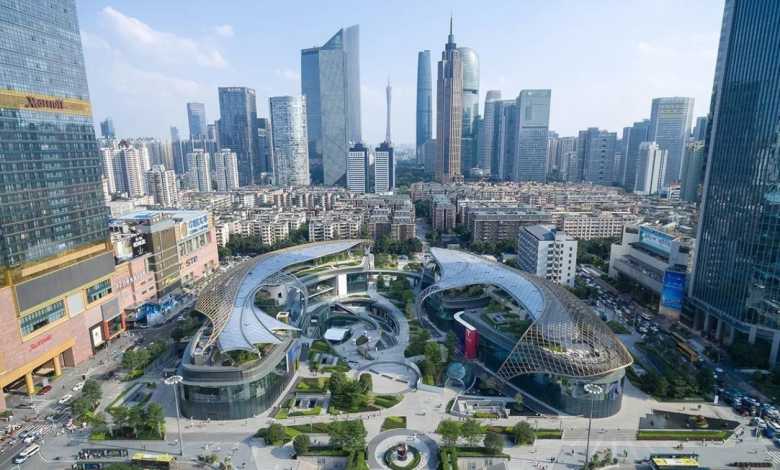
This spring has been anything but ordinary for Guangzhou’s foreign trade community. The sudden surge in tariffs and changing global trade dynamics have hit the entire export supply chain hard. But rather than retreat in the face of uncertainty, Guangzhou’s exporters have shown remarkable resilience. Since the May 12 Joint Statement from the China-US-Geneva Economic and Trade Talks, a crucial 90-day window for action has opened. For Guangzhou’s trade enterprises, this means racing against time—restarting production, securing orders, and speeding up shipments.
In these challenging times, Guangzhou’s foreign trade is not only surviving but thriving. From January to April this year, Guangzhou recorded a total import and export value of over RMB 400.2 billion, representing a 17.6% increase year-on-year. This growth rate outpaced both national and provincial averages by wide margins. Remarkably, Guangzhou has maintained positive monthly growth for 11 consecutive months, with imports and exports consistently exceeding RMB 100 billion monthly.
What makes this growth story even more impressive is the role of private enterprises. Private companies accounted for RMB 241.9 billion of Guangzhou’s trade, up 32.7% year-on-year. These businesses alone contributed 17.5 percentage points to the city’s overall trade growth.
So, what’s driving Guangzhou’s success in these turbulent times?
Building Strength Under Pressure: Finding Opportunity Amidst Challenge
“We didn’t expect this year’s Canton Fair to be so productive—new and old customers alike placed large orders. We’ve secured orders for over 20 containers!” shared Zeng Shaohui, general manager of Beile Intelligent, with relief and excitement. Thanks to its self-developed AI massage chairs, the company attracted buyers from around the globe and is now operating at full capacity.
For Guangzhou’s exporters, the message is clear: focus on improving internally while navigating external storms. Luo Huiping, general manager of Yinghao Craftworks, reflected on her company’s journey through more than two decades of export ups and downs: “Every major challenge forces us to innovate and evolve. In every crisis, there’s opportunity.”
Yinghao now holds over 400 patents and exports to more than 130 countries, earning its position as a leader in the arts and crafts export sector. From January to April, Guangzhou’s self-owned brand exports rose to 17.1% of total exports. The city’s “new trio” of electric vehicles, lithium batteries, and solar cells saw export growth of 24.5%, reaching RMB 6.3 billion. Meanwhile, cross-border e-commerce exports surged by over 50% to RMB 65 billion, while market procurement trade also grew by more than 50%. This has helped local brands in apparel, home appliances, and other traditional sectors go global.
Expanding Global Footprints: Diversifying Markets to Break Free of Risk
One of the key sources of Guangzhou’s trade resilience lies in its broad and diversified market reach. From January to April, trade with the EU, UK, and South Korea grew at double-digit rates. Meanwhile, trade with Belt and Road partner countries reached RMB 187.59 billion, up 28.5%, and accounted for nearly 47% of Guangzhou’s total trade. Exports to ASEAN nations skyrocketed by 43.6% to RMB 70.16 billion.
Companies like Baotian High-Tech are racing to adjust their strategies. “We’re actively hiring new sales talent and focusing on non-US markets,” said administrative manager Chen Jian. Once heavily reliant on the US for 70% of its business, the company has shifted attention toward Southeast Asia, India, and the Middle East, engaging customers through trade shows and digital campaigns.
Guangzhou-based Mapu Digital has already built strong channels in Southeast Asia and South America, where in some markets, its compatible imaging drums command over 70% market share. “In places like Indonesia, Vietnam, and Argentina, our products are in high demand due to their great value,” explained sales manager Li Zicong.
Logistics has played a vital role in supporting these expansions. Beifayi Group’s ExportEasy service, for example, offers streamlined logistics for South American clients. By forming local alliances in Colombia, Chile, and Peru, and deploying dedicated customs teams, they’ve slashed delivery times to 10-15 business days.
Bridging Internal and External Markets: How Government and Business Work Together
During the Canton Fair, Guangzhou’s signature “Guangzhou Night” music and beer festival made a splash. Blending Cantonese opera with pop music, the event created a unique bridge between local culture and global buyers. “We found high-quality clothing suppliers here in no time,” said an excited Chilean buyer. Liu Zhiyong, general manager of Yongjia Garments, added, “Events like these don’t just generate orders—they help us build valuable global connections.”
The government’s proactive measures are also key to Guangzhou’s success. The city rolled out four major initiatives this year, including its “18 Stabilization Measures for Foreign Trade.” Programs supporting export credit insurance and overseas brand development are already underway, with applications exceeding RMB 100 million.
Domestic channels are opening up in parallel. Local retail chain Shengjia announced it would feature “Foreign Trade Premium Zones” in over 60 of its stores, connecting with more than 20 export manufacturers. Guangzhou is also organizing regular matchmaking events and launching integrated domestic-foreign trade policies, helping foreign trade products gain popularity at home.
Conclusion
From strengthening internal capabilities to broadening global reach and uniting government and business efforts, Guangzhou’s foreign trade stands as a powerful example of resilience and innovation. As global markets shift, Guangzhou’s exporters are proving that with the right strategies, they can not only weather the storm but come out stronger than ever—fighting harder, growing faster, and shining brighter on the world stage.